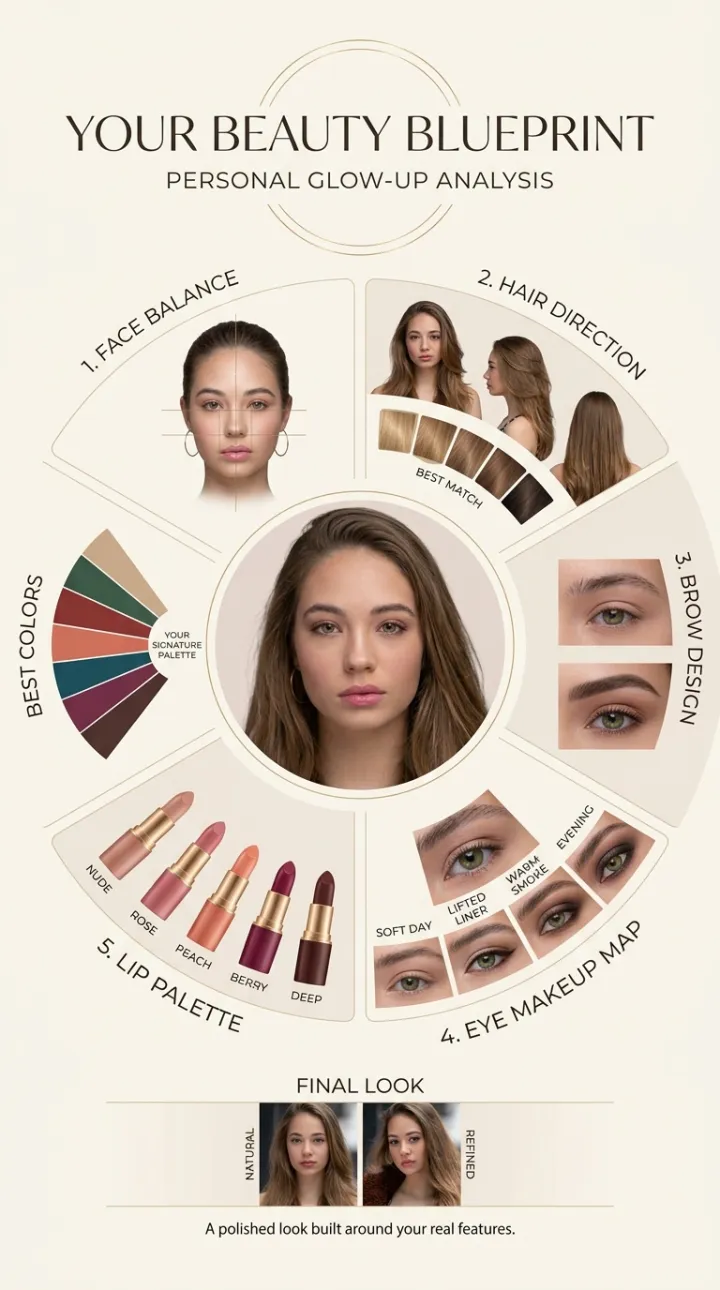
How to Find Your Face Shape (and Why It Matters)
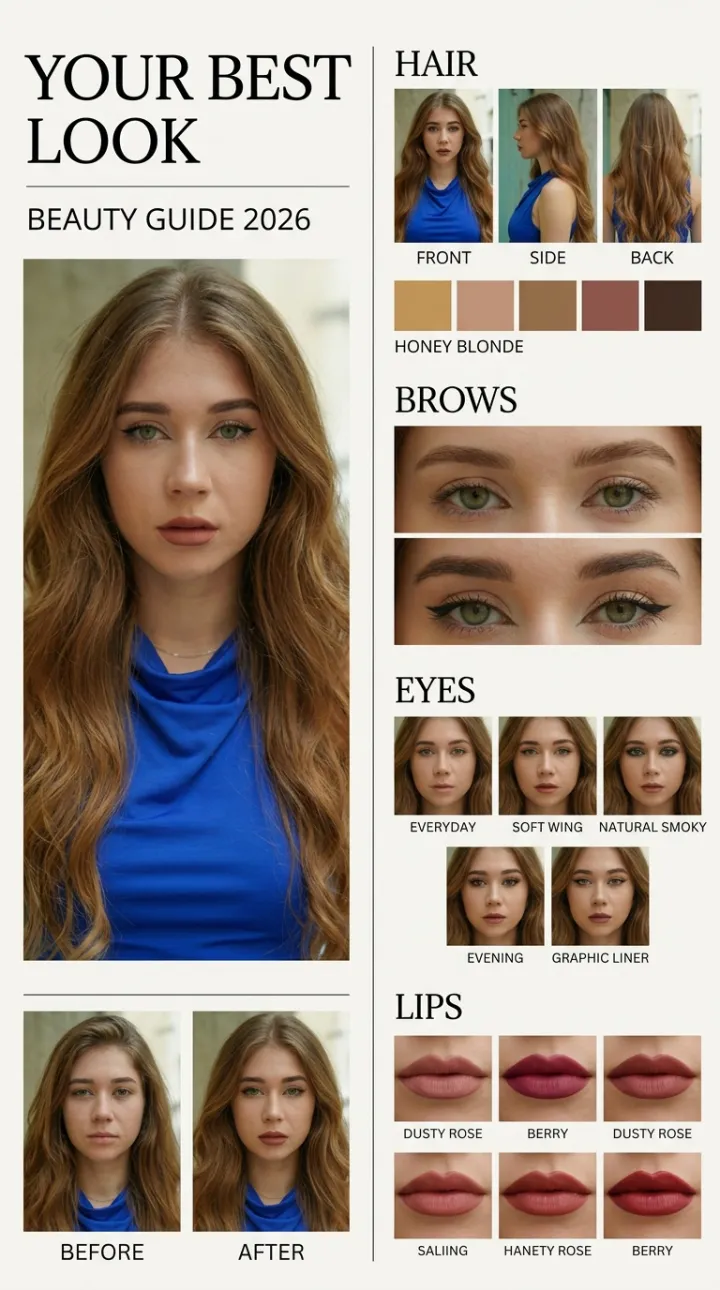
Your face shape is the single biggest factor in whether a haircut looks like it was made for you or borrowed from someone else. It's determined by the relationship between three measurements: your forehead width, cheekbone width, and jaw width, plus the overall length of your face.
The measuring-tape method
Stand in front of a mirror with a soft measuring tape. Measure across your forehead at its widest point, across your cheekbones, across your jawline at its widest point, and from your hairline straight down to your chin. Write down all four numbers.
Reading the numbers
- Oval: face length is about 1.5x the width, cheekbones are the widest point, jaw is slightly narrower than forehead.
- Round: width and length are close to equal, cheekbones are the widest point, jawline is soft with no sharp angles.
- Square: forehead, cheekbones and jaw are all similar widths, with a strong, angular jawline.
- Heart: forehead is the widest point, jaw narrows to a small, sometimes pointed chin.
- Long/Rectangle: similar to oval but with a longer overall face length relative to width.
Why it matters for haircuts
A haircut works with your face shape by adding width where you're narrow and removing visual weight where you're already wide. Round faces usually benefit from height and angles; square faces soften with waves or side-swept layers; heart-shaped faces balance a wider forehead with volume near the jaw. If your face is closer to oval or long, see our guide to best haircuts for oval and long faces.
Can two people have the same face shape but need different haircuts?
Yes. Face shape is the starting point, not the whole answer — hair texture, density, and how your features sit within that shape all change which specific cut looks best.