Facial Hair Styles: Finding What Suits You
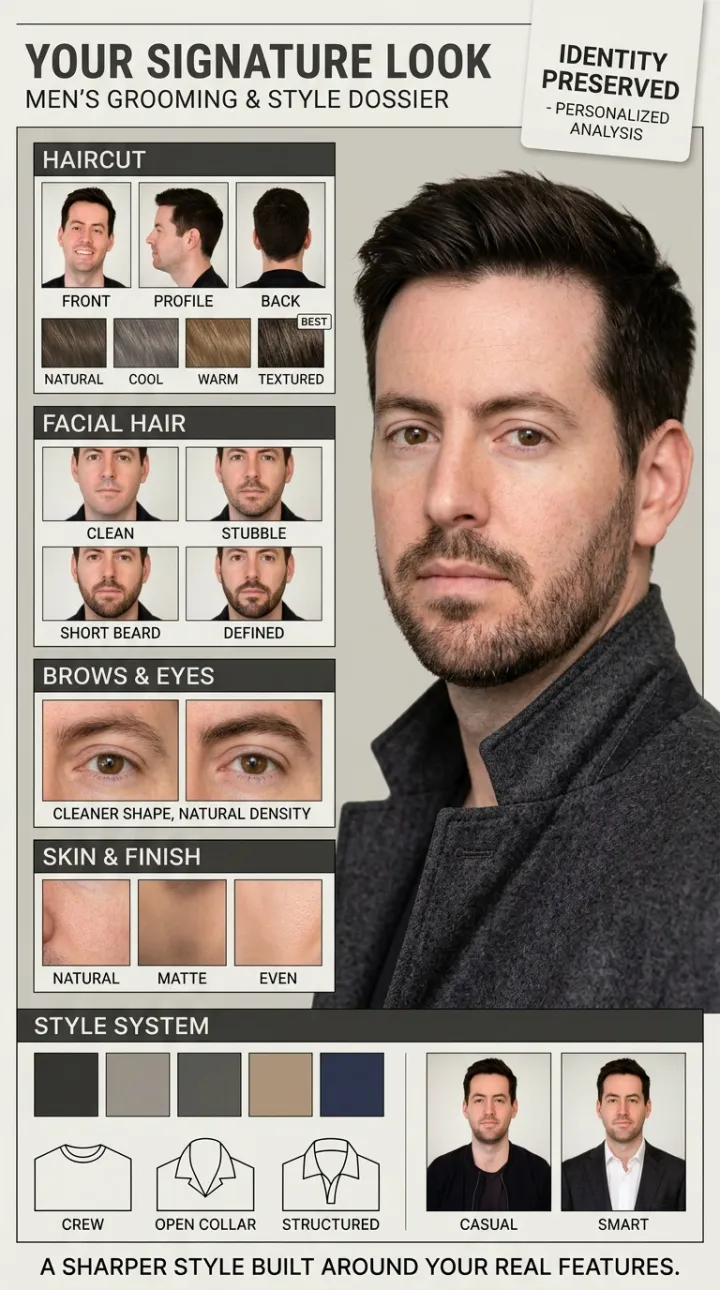
Facial hair works the same way a haircut does — it can add definition to a soft jaw, or soften a jaw that's already very angular, depending on where and how much you let it grow.
Round or soft jaw
A fuller beard, kept slightly shorter and tighter along the cheek line, adds a defined edge that a bare jaw doesn't have.
Square or angular jaw
A shorter, rounder beard shape softens strong angles rather than emphasizing them further with sharp, squared-off lines.
Long or narrow face
Fuller growth on the sides with a shorter chin area adds width without adding more length to an already-long face.
Clean-shaven or light stubble
Works well on most faces and is the lowest-maintenance option — a defined stubble shape (clean neckline and cheek line) still counts as intentional grooming, not just 'not shaving.'
How often does facial hair need trimming to look intentional?
Most styles need a trim every 1-2 weeks to hold their shape, plus regular neckline and cheek-line cleanup in between.